

Euro casino Plinko
Introduction
When I assess a fast casino format, I usually start with one question: does the simplicity on the screen match the real experience underneath it? In the case of Euro casino Plinko, the answer is no — and that is exactly why this format deserves a closer look. At first glance, Plinko seems almost too simple to analyse: you set a stake, choose a risk level, drop a ball, and wait for it to bounce through a field of pegs into a payout slot. But in practice, the session can feel very different depending on the settings, the board layout, and the player’s expectations.
Plinko has become highly visible because it compresses several things players like into one compact format: instant results, clear visual feedback, and the constant sense that a big multiplier might land on the next drop. That combination gives it a very different rhythm from classic online slots, roulette, or card-based casino games. It also creates a common misunderstanding. Many players see Plinko as a light, casual diversion. In reality, it can be one of the more emotionally swing-heavy options on a gaming platform, especially when higher risk settings are involved.
In this review, I will focus strictly on the game itself: what Plinko is, how the mechanics work, why the tempo feels so specific, where the real risks are, and what a player in New Zealand should understand before trying Euro casino Plinko. The goal is not to oversell the format. It is to explain what this game genuinely offers, where it performs well, and where it can disappoint if approached with the wrong expectations.
What Plinko is and why it attracts so much attention
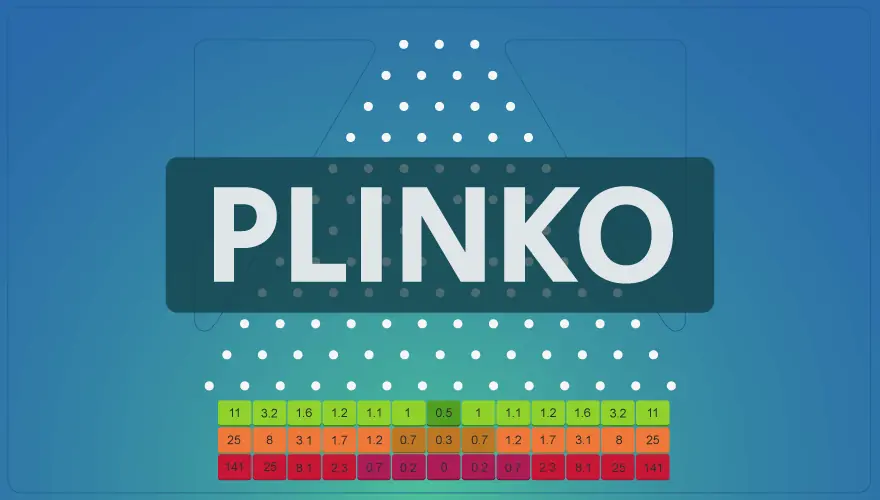
Plinko is a probability-based casino game built around a vertical board filled with pegs. A ball is released from the top, hits multiple obstacles on the way down, and eventually lands in one of several slots at the bottom. Each slot corresponds to a multiplier. Lower multipliers tend to sit near the centre, while the highest values are usually positioned at the far edges, where the ball reaches less often.
That core idea is easy to grasp within seconds. There are no paylines, no symbol combinations, no bonus wheels to decode, and no paytable that takes ten minutes to understand. This low entry barrier is one of the main reasons Plinko draws attention. A new player can understand the interface almost immediately.
But visibility alone does not explain its rise. What really makes Plinko stand out is the contrast between a clean presentation and a highly variable outcome pattern. The player sees a straightforward drop animation, yet the experience can range from a long sequence of small returns to sudden spikes that reshape the whole session. That tension keeps people engaged.
I would highlight three reasons why Euro casino Plinko tends to hold attention better than its simple appearance suggests:
- Immediate readability. You can see the path, the landing slot, and the multiplier without interpreting a complex screen.
- Fast emotional feedback. Every drop resolves quickly, so the game creates a strong loop of anticipation and result.
- Visible randomness. Unlike a slot, where the random process is hidden behind spinning reels, Plinko shows the bounce path in real time. Even though the mathematics still sit in the background, the randomness feels tangible.
That last point matters more than many players expect. In slots, randomness is abstract. In Plinko, it is theatrical. You watch the ball flirt with a high-value edge and then bounce back toward the middle. This visual near-miss effect is a major part of the game’s appeal, but it is also one of the reasons sessions can become more intense than the interface suggests. If bonuses are what you care about, coupons guide for Euro Casino accounts breaks down every offer currently running.
How the core Plinko mechanics actually work
To understand Euro casino Plinko properly, it helps to separate the visible action from the underlying logic. The visible action is straightforward: a ball drops from the top and bounces left or right as it hits pegs. The underlying logic is a distribution model shaped by board size, slot layout, and chosen risk level.
In most versions of Plinko, the player can adjust at least two key variables:
- Stake size
- Risk level — often low, medium, or high
Some versions also allow a choice of rows. More rows generally mean a longer path, more possible landing positions, and a broader spread of outcomes. This does not automatically make the session better or worse, but it changes the shape of the result distribution.
The important practical point is this: the ball’s movement looks organic, but the game is still driven by a mathematical model that defines how often each payout band is expected to appear over time. The centre slots are usually more likely because there are more route combinations leading there. The extreme edges, where the largest multipliers sit, are less likely because fewer paths reach them.
Here is a simple breakdown of what the player is really adjusting:
| Setting | What it changes on screen | What it means in practice |
|---|---|---|
| Stake | The amount attached to each drop | Directly affects session cost, pace of bankroll use, and emotional pressure per result |
| Risk level | The multiplier spread across bottom slots | Changes how often small returns appear versus how rarely large multipliers can land |
| Rows (if available) | Board depth and number of landing routes | Influences volatility feel, path length, and distribution across the board |
| Auto-play / repeated drops | How quickly rounds continue | Can accelerate losses or compress variance into a shorter time window |
One detail I think many players underestimate: in Plinko, the result pattern is often easier to misread than in slots because the path is visible. When you watch several balls drift toward one side, it is tempting to assume a trend is forming. In reality, the visual path can create the illusion of momentum where none exists. This is one of the game’s most deceptive traits. It looks readable, but the session can still behave with full statistical indifference.
Why the tempo feels so different during a real session
Plinko has a distinct session rhythm. It is faster than most table games, cleaner than many crash-style formats, and often more repetitive than players expect after the first few minutes. Whether that feels satisfying or draining depends on what the player wants from a casino session.
The tempo is driven by short resolution cycles. You make a choice, drop a ball, and get a result almost immediately. There is no reel spin buildup, no dealer procedure, and no complicated side event. That speed creates a steady loop, and the loop is central to the game’s appeal.
On a practical level, this means three things:
- Bankroll movement becomes very visible. A long stretch of low multipliers is easy to feel because results come one after another with little downtime.
- The game rewards attention in short bursts. You do not need to study a complex screen, but you do need to stay aware of how quickly repeated drops add up.
- Session mood can change abruptly. A single high multiplier can turn a flat run into a positive one, but relying on that moment is risky.
This is where Euro casino Plinko can surprise players who are used to slots. Slots often use features, animation layers, and bonus sequences to vary the pacing. Plinko has far fewer tools for disguising repetition. If the outcomes are ordinary, the session feels ordinary. If they spike, the session feels electric. There is less middle ground.
A memorable observation from repeated play sessions is that Plinko often feels calm and tense at the same time. The interface is minimal, almost stripped back, yet the final bounce before the ball lands can carry more suspense than a much louder slot sequence. That contrast is part of the design’s strength.
Risk levels, probabilities, and what players often misunderstand
If I had to identify the single most important thing to understand before launching Euro casino Plinko, it would be this: risk level changes the personality of the session more than the interface suggests. Many players treat the low, medium, and high settings as minor variations. They are not. They can produce very different experiences.
At a low risk setting, the board usually offers a tighter concentration of smaller multipliers. The result pattern is more stable, and returns tend to cluster closer to the centre. This does not mean safe in any absolute sense, but it usually means fewer extreme swings.
At a high risk setting, the spread becomes wider. The top multipliers are more attractive, but they are hit much less often. In practice, this can create long dry stretches punctuated by occasional sharp jumps. Some players enjoy that chase. Others find it exhausting after a short time.
The key misunderstanding is that visible bouncing makes the game feel more controllable than it is. The player may start to believe that changing drop position, watching prior outcomes, or reacting to recent edge hits can reveal a pattern. In a properly structured Plinko game, that confidence is misplaced. The session can look like it is telling a story when it is really just generating outcomes within a probability framework.
| Risk setting | Typical session feel | Likely player reaction |
|---|---|---|
| Low | More frequent modest returns, fewer dramatic spikes | Better for testing the format and managing shorter bankroll swings |
| Medium | Balanced mix of routine drops and occasional stronger multipliers | Suitable for players who want movement without extreme pressure |
| High | Longer stretches of weak outcomes with rare standout hits | Appeals to players comfortable with sharp variance and uneven sessions |
Another point worth stressing: probability in Plinko is not experienced evenly. Even if the long-term model is mathematically defined, the short-term session can feel chaotic. Two players can spend the same amount with the same settings and come away with very different impressions of the game. That is not unusual here; it is part of the format.
How risky Plinko really is and who will handle it well
Plinko can be relatively mild or quite aggressive depending on the chosen setup, but even in gentler configurations, it remains a variance-driven format. The reason is simple: the game does not build value through layered features or strategic decisions. It resolves each drop quickly, and the quality of the session depends heavily on where the ball lands over repeated attempts.
So how risky is it? The honest answer is that the format becomes meaningfully more demanding as soon as a player increases the risk level or raises stake size while maintaining a fast drop frequency. That combination can drain a bankroll faster than the clean interface suggests.
From my perspective, Euro casino Plinko is best suited to players who:
- understand that short-term outcomes can be uneven;
- prefer direct, fast results over extended feature sequences;
- can set a session limit and stick to it without chasing edge multipliers;
- enjoy randomness as a visible part of the experience rather than a hidden back-end process.
It may be a poor fit for players who want a strong sense of progression, lots of bonus content, or the feeling that decision-making materially shapes the result. Plinko is not a strategy game in any meaningful sense. It is a probability display with a compelling presentation. Anyone stuck on account verification can follow the steps laid out in Euro Casino poker practical player guide.
One of the more revealing traits of this format is that boredom and overcommitment can arrive from the same source: repetition. Some players lose interest because each round is structurally similar. Others keep dropping because the next result is always only a second away. That is a narrow psychological line, and it is worth recognising before a session starts.
What to know about outcome patterns before you press start
Before playing Euro casino Plinko, it is useful to reset expectations. This is not a format built around constant meaningful returns. It is built around a distribution of outcomes where many results will be modest, some may fall below stake, and a small number can stand out sharply depending on the board setup.
That has several practical consequences:
First, a short session may tell you very little about the full character of the game. A brief run can make Plinko look either generous or disappointing without reflecting how the distribution behaves over longer play.
Second, the visual drama of the ball path can distort judgement. A ball that nearly reaches a top multiplier but falls inward is still just a non-top result. Near misses can feel significant, but they do not improve the session balance.
Third, repeated small returns can create a false sense of stability. If those returns remain below the stake level or fail to offset losing drops, the bankroll can still trend downward steadily.
For that reason, I generally see the most sensible approach as a measured one:
- Start with a low or medium risk setting to understand the board behaviour.
- Use a stake size that allows enough drops to observe the session without immediate pressure.
- Avoid interpreting short streaks as information.
- Treat high multipliers as occasional events, not expected milestones.
This sounds obvious, but it matters because Plinko’s presentation encourages intuition more than analysis. The board invites the player to “read” the bounce. In practice, discipline matters more than intuition.
How Plinko differs from slots and other common casino formats
Plinko is often grouped loosely with slots because both are simple to access and heavily driven by chance. That grouping is understandable, but it misses important differences.
Classic online slots rely on reels, symbols, paylines or ways-to-win structures, and often multiple bonus layers. They create variety through theme, feature depth, and event sequencing. A slot session may include base spins, free spins guide, expanding symbols, multipliers, bonus buys, or mini-games. The player is often reacting to a changing screen state.
Plinko strips most of that away. There are no symbol combinations to track and usually no narrative progression. The core event is always the same: a ball falls and lands in a multiplier slot. The variability comes from distribution, not from layered content.
Compared with roulette, Plinko shares the attraction of quick outcomes, but the feel is different. Roulette presents a clear betting grid and a familiar probability map. Plinko feels less formal and more kinetic. Compared with crash games, Plinko is less about timing an exit and more about accepting a result after release. Compared with blackjack, it offers virtually no strategic depth.
In practical terms, the main differences look like this:
- Versus slots: less thematic depth, less feature variety, more transparent result presentation
- Versus roulette: more visual motion, less structured betting logic
- Versus crash formats: no cash-out timing pressure, but still a strong anticipation loop
- Versus card games: minimal decision-making after setup
This is why Plinko can feel refreshing to one player and too thin to another. If you value clean design and instant clarity, it works well. If you want layered mechanics and evolving rounds, it can feel repetitive quickly. Those comparing loyalty perks can weigh this section against Euro Casino free chips details before claiming bonuses or depositing.
Where the game performs well and where it falls short
From an analytical standpoint, Euro casino Plinko has clear strengths. It is accessible, fast, and easy to read. The interface usually communicates the essentials without clutter. The risk settings can meaningfully reshape the session. And the visual path of the ball gives every result a sense of physical movement, even though the underlying process remains statistical. Before you make a deposit, it is worth reading Euro Casino chicken road help for the fee and speed details.
Its strongest points are not hard to identify:
- Low barrier to entry. New players understand the format almost instantly.
- Strong visual suspense. The descent creates tension without requiring complex animation.
- Flexible session style. Risk levels allow the player to choose between steadier and sharper distributions.
- Fast feedback loop. Ideal for players who dislike waiting through long spin cycles or dealer procedures.
But the limitations are just as real.
- Repetition becomes obvious. Without bonus layers, the format can feel samey over time.
- High-risk settings can be deceptively harsh. The promise of large multipliers may overshadow how infrequently they appear.
- Visible motion can encourage false pattern-reading. Players may think they are seeing trends where there are none.
- Session control matters more than it seems. Because rounds resolve quickly, losses can accumulate quietly.
One observation that stands out to me is that Plinko is one of the few casino formats where the interface can make a player feel both informed and exposed. You see everything that happens. Yet that transparency does not reduce uncertainty. In some ways, it makes uncertainty feel sharper.
What to check before launching Euro casino Plinko
Before starting a session, I would focus on a few specific checks rather than treating Plinko as a casual click-and-go option. The game is easy to enter, but that is not the same as being consequence-free.
Here is what matters most:
- Look at the risk setting first. Do not assume the default is right for your bankroll or mood.
- Understand the stake-to-speed relationship. A modest stake can still become expensive if you run many fast drops.
- Check whether row selection is available. This can materially change how the board behaves.
- Use demo play if offered. Not to predict results, but to understand the flow and distribution feel.
- Set a stopping point before the session begins. This is especially important because the format encourages “just one more drop” thinking.
I would add one more practical note for players in New Zealand: when trying Euro casino Plinko, pay attention not only to the headline multipliers but to the ordinary outcomes in between. The advertised top numbers are what attract attention, but the everyday landing pattern is what defines the real session experience. If bonuses are what you care about, best Euro Casino bingo breaks down every offer currently running.
Final verdict on Euro casino Plinko
Euro casino Plinko offers a very specific kind of casino experience: fast, visually clear, probability-driven, and often more intense than its minimal design suggests. Its biggest strength is that it removes clutter. You immediately understand what is happening, and every drop delivers a direct result. For players who value speed, clarity, and visible randomness, that can be genuinely appealing.
Its main caution point is just as clear. The simplicity of the interface can hide how uneven the session may become, especially at higher risk levels. Plinko is easy to start, but it is not automatically gentle. The chase for large multipliers can turn a light session into a volatile one very quickly.
Who is it for? In my view, it suits players who like short result cycles, accept statistical swings, and do not need elaborate bonus structures to stay engaged. Who may want another format instead? Players who prefer strategic input, narrative progression, or deeper feature variety will probably get more value from slots, blackjack, or other casino games.
The most honest conclusion is this: Plinko does not promise depth in the traditional sense. What it offers is concentrated tension, transparent presentation, and a flexible risk profile inside a very simple frame. That combination is exactly why some players keep coming back to it — and why others decide after a few sessions that the format is not for them. If you approach Euro casino Plinko with realistic expectations, it is easy to see both its appeal and its limits.
FAQ
What is the basic Plinko gameplay on the Euro casino site?
A ball drops from the top of the Plinko board, hitting pegs and walls until it lands in a scoring pocket. Each pocket has a different multiplier, so the final landing determines the win. The game pace is quick, making it suitable for short sessions.
How does the Plinko multiplier work when the ball lands?
The landing pocket is tied to a multiplier value. If the game shows a win multiplier for that pocket, the payout is based on the stake and the displayed multiplier. Different boards and settings may affect the range of multipliers, so the in-game table is the best reference.
Is Plinko available in demo mode or real-money play?
Euro Plinko supports both demo mode and real-money play. Demo mode lets a player practice the feel of ball drops without using casino funds. Real-money play uses the active stake and balance on the account, so the game header will reflect the current mode.
What should be checked before launching a Plinko round?
Check the selected stake and make sure the game is in the intended mode (demo or real-money). Confirm the current multiplier range shown for the Plinko board before starting the drop. A mismatch in stake or mode is one of the most common reasons players see unexpected results.
How are withdrawals handled if Plinko winnings are added to the balance?
Plinko winnings typically increase the account balance used for withdrawals. Withdrawal availability and processing steps depend on the player’s verification status and payment method. Before requesting a withdrawal, it’s best to check that the account is verified and that the chosen method is enabled.
How can a player switch between demo mode and real-money play without losing progress?
Use the mode toggle shown in the Plinko interface to switch between demo and real-money. Progress in demo is separate from real-money outcomes since demo uses practice balance. The easiest way is to finish or stop rounds, switch the mode, then start a fresh round in the chosen state.
What common beginner mistakes can affect Plinko results?
Common issues include overlooking the stake selection, starting a round in demo when real-money play was intended, or assuming the stake changes mid-drop will affect the active ball. Another frequent mistake is ignoring the on-screen multiplier range for the selected board. Rechecking stake and board settings right before confirming each drop reduces errors.
How does Euro Plinko choose the board configuration and multipliers shown for each session?
The Plinko interface displays the active board, pocket multipliers, and any risk or volatility behavior relevant to the current configuration. These details are set by the game layout available at the moment and may differ between sessions or devices. Checking the board panel right after launching ensures the correct multipliers and stake limits are visible before any round begins.